


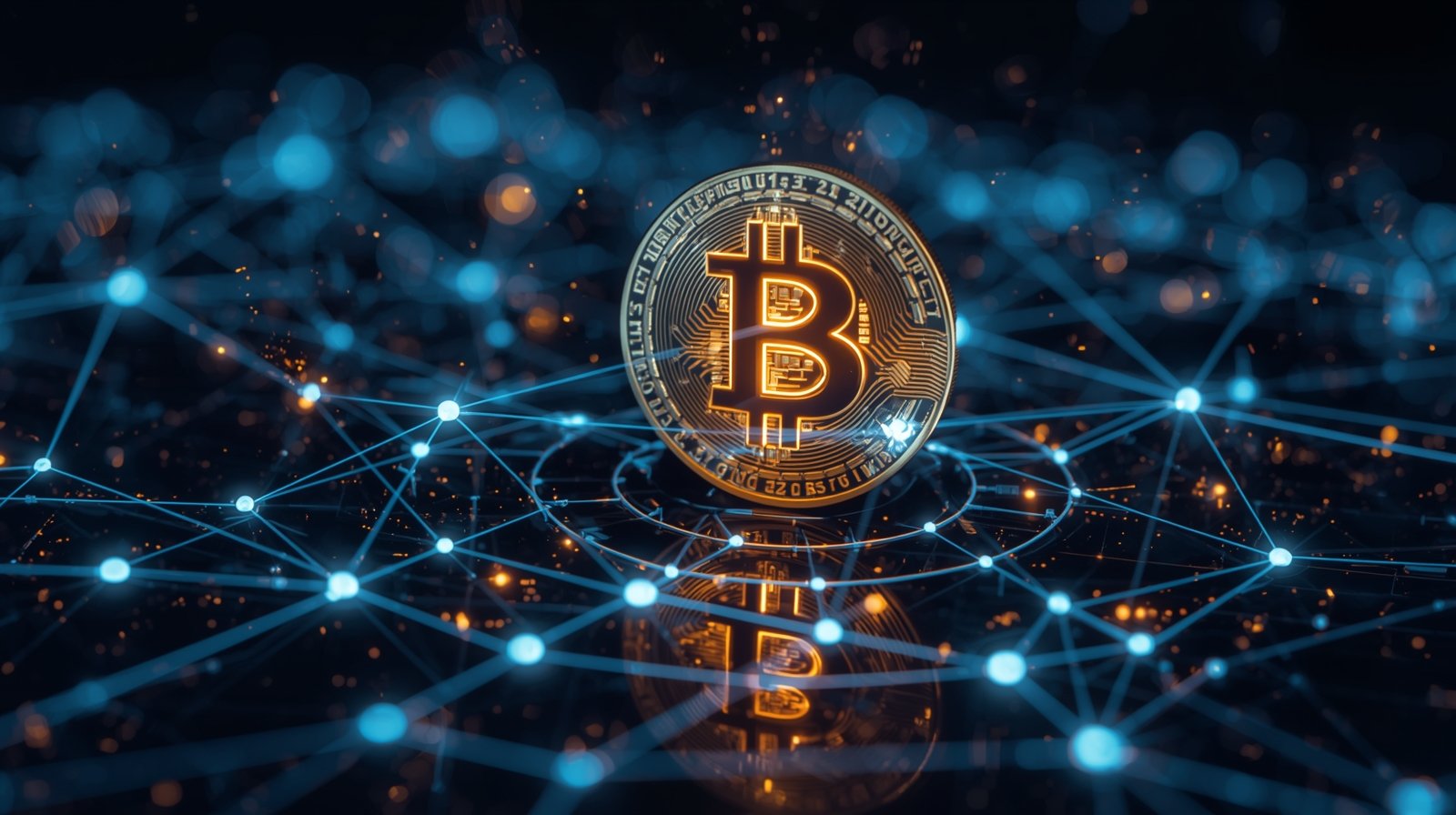
Introduction: Bitcoin past the Hype and Headlines.
People tend to dramatize Bitcoin with headline-grabbers and incredible price gains, and plummeting overnight fortune, and new millionaires. But this is not the entire picture because of concentrating solely on its market price. Bitcoin is no longer a speculative asset in digital form in 2026. It has become a key technology and economic infrastructure, which is shaping the economics of the world, artificial intelligence, digital property, and financial self-sufficiency.This paper takes a bottom-up approach to Bitcoin. Rather than parrot the superficial definitions, it describes the real mechanics of Bitcoin, why people utilize it, where it is accepted, how AI is linked to it, and what its future contribution could be in the future of money.
What Is Bitcoin? An Intelligible and Realistic Demystification.
Bitcoin is a cryptocurrency that is not controlled by banks, governments, or other central authorities as it is decentralized. It is not printed, controlled and regulated by one institution as is the case with traditional money. Rather, Bitcoin is a safe digital currency on an international network of computers.
Bitcoin was launched in 2009 by an unknown person or a group of people under the name Satoshi Nakamoto. The main purpose was to establish a framework in which individuals were capable of sharing value within the Internet without having to rely on intermediaries via banks or electronic payment methods.
Fundamentally, Bitcoin is:
- Digital ownership
- Financial sovereignty
- Institutional trust vs. mathematical trust.
What is Bitcoin: The Technology of Cryptocurrency.
Essentials of Blockchain Technology.
Bitcoin operates under a technology known as blockchain. Blockchain is a distributed public registry which documents all transactions that have been made in the network. This ledger is replicated and distributed among thousands of computers all over the world instead of being stored in a single server.
The transactions are combined in a block and these blocks are connected in a chronological order to create a chain. A block when added cannot be changed or deleted.
This system ensures:
- Openness without disclosure of personalities.
- Cryptographic security.
- Fraud and manipulation resistance.
Bitcoin is decentralized and very safe since control of blockchain is not in the hands of any single entity.
Bitcoin Mining: It Is not only the Production of New Coins.
Mining of Bitcoin is misconstrued. The new bitcoins are not simply the issue of creating new bitcoins. Mining is important in the process of sustaining and ensuring the network is safe.
Computational power is used by miners to verify transactions and append them to a blockchain. In their turn, they are rewarded with Bitcoin. Duplicate spending and malicious attacks are also avoided in this process.
The state of mining by 2026 is going to be different:
- Optimization can be improved by AI.
- The use of renewable energy has gone up.
- High tech hardware lessens the environmental effects.
More than ever before, mining is now more sustainable and network-stable.
What is the Problem that Bitcoin is Trying to Solve?
Bitcoin has been invented to address failures in conventional financial systems. Trust is the main foundation of centralized banking and therefore, can be destroyed in times of economic crises, inflation or political instability.
Bitcoin solves a number of important problems:
- High inflation through printing of unlimited money.
- Limited banking services.
- Expensive costs of transacting internationally.
- Filtering of financial operations.
Bitcoin provides people with greater control of money by providing them with a decentralized alternative.
Applications of Bitcoin in the Real World.
The applications of bitcoin have become much broader than early adopters.
International Remittances and Payments.
Bitcoin allows quick cheap international transfer without middlemen. This will be of particular benefit to individuals who remit money to foreign countries.
Internet Commerce and Internet Services.
Bitcoin is also accepted by many online platforms as a means of subscription, products and services, and lessening the use of the traditional payment gateways.
Digital Work and Freelancing.
Bitcoin is used by remote workers to get paid without fear of currency exchange and delays in the bank.
The Store of Value
Bitcoin is usually likened to gold due to its scarcity. People have it as a long term asset since it helps safeguard their wealth in the face of inflation.
A rising relationship: Bitcoin and Artificial Intelligence.
The rising interconnectedness between Bitcoin and artificial intelligence is in 2026.
The AI helps the ecosystem of Bitcoin in several respects:
- Market research and trend projections.
- Automated trading systems
- Anomaly detection and network security.
- Mining operations optimization on energy.
Simultaneously, Bitcoin offers AI-based economies with a decentralized value-transfer and payment layer. This is a relationship that is defining the future of digital finance.
Regulations and Countries: Bitcoin Once Again in the World.
The status of Bitcoin is country-dependent.
Countries That are Pro-Regulation.
- United States
- Germany
- Japan
- Canada
- United Arab Emirates
- Australia
Instead of prohibiting Bitcoin, these countries control it as a digital currency.
Nations whose Usage is Controlled or Limited.
- Pakistan
- India
- Turkey
Bitcoin is not criminalized in these regions, yet it is regulated in a tough way by money and other financial authorities.
Dangers and Obstacles of Bitcoin.
Bitcoin, though beneficial, is not risk-free.
Some challenges include:
- High price volatility
- Regulatory uncertainty
- Fraud against ignorant users.
- Personal security responsibility.
Bitcoin needs people to have knowledge of digital security, private keys and long term planning. In ignorance, errors may be expensive.
The Limited Supply of Bitcoin: reasons why it is important.
There will only be 21 million bitcoins. This supply is fixed into the code, and it is impossible to alter it without unanimity of the world.
This scarcity:
- Protects against inflation
- Enhances long term value potential.
- Asserts that Bitcoin is different from conventional currencies.
The economic model of Bitcoin gains more importance as the demand increases and the supply is constant.
The Future of Bitcoin After 2026
The future of bitcoin is shifting towards practicality and not speculative.
Key developments include:
- Accelerated transactions layer-2 solutions.
- Institutional adoption
- Better user experience and wallets.
- Implementation with AI-based systems.
Bitcoin is developing into an international digital settlement layer instead of a trading asset.
Is Bitcoin for Everyone?
Bitcoin is available to all people having access to the internet, yet not a quick way to become rich. It requires:
- Education
- Patience
- Risk awareness
Individuals with the knowledge of its basics will be better placed to enjoy its long-term prospects.
Conclusion: The Future of Bitcoin as a Digital Finance.
Bitcoin 2026 will be more than digital money. It is an open source financial system that is founded on security, transparency and self-determination. It has penetrated all the areas of technology, artificial intelligence, international trade and personal finance.
Bitcoin has withstood the test of time, and it has demonstrated its relevance. To those people, businesses, and societies who are open to change, Bitcoin is a preview of how money will look like in the future: open and borderless with an innovative approach.
Also Read : start-small-business-online-pakistan-2026/
