




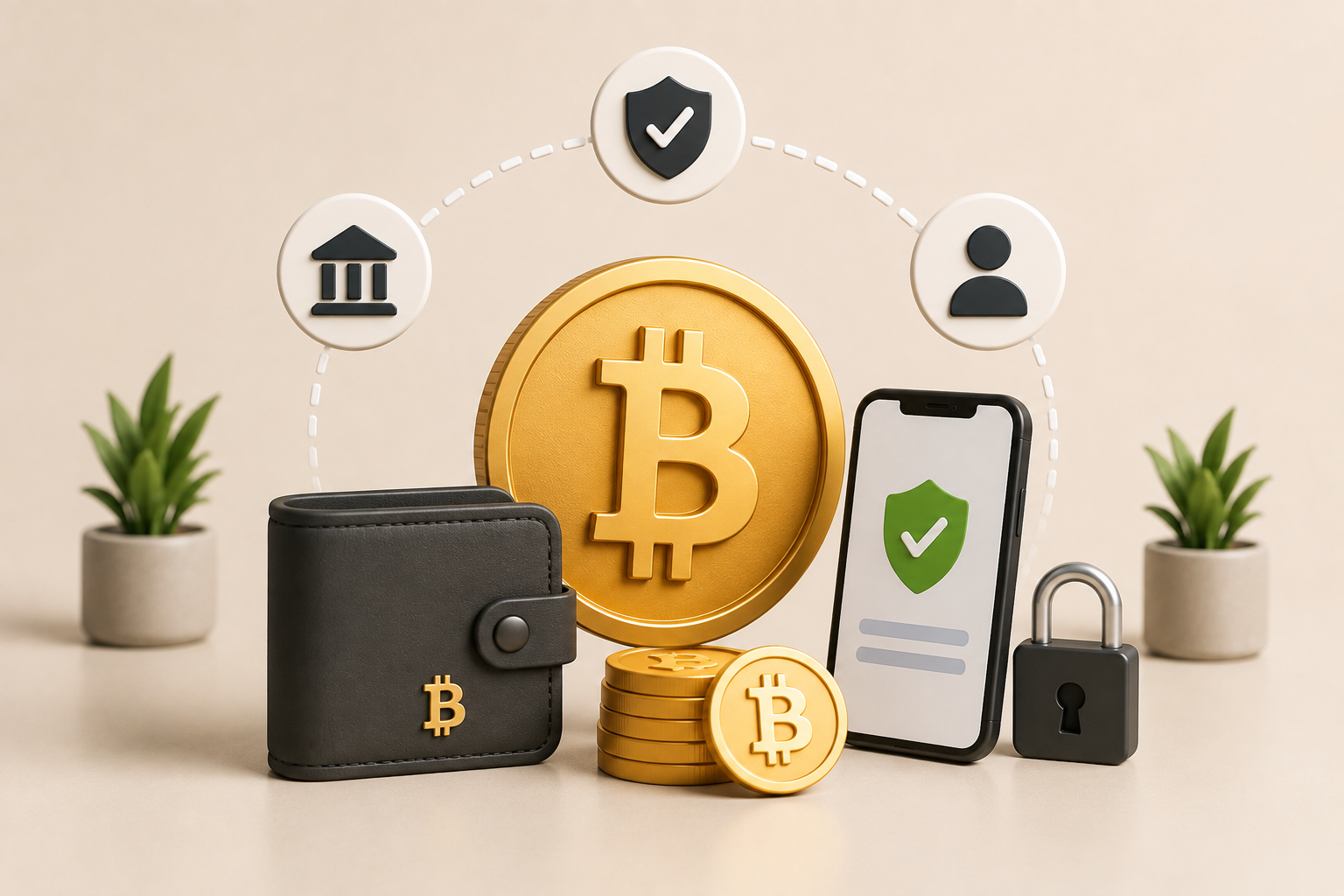
Bitcoin is now more accessible than ever before, but this does little to mitigate its complexity as a concept and technology. A beginner may sign up for an exchange account in less than an hour, but know virtually nothing about how Bitcoin transactions work, where the currency is stored, and what potential pitfalls await any new participants.
Getting started with Bitcoin should not be driven by impatience but the desire to understand the essentials first.
Bitcoin encompasses a number of unique elements that a newcomer should be aware of, such as the underlying blockchain, crypto wallets, private keys, and exchanges. Once these concepts are properly understood, getting started with actual Bitcoin transactions will seem less intimidating.
Here is a list of vital knowledge every beginner needs to absorb before getting involved with cryptocurrency.
Understand the Essence of Bitcoin
Bitcoin is a decentralized digital asset that utilizes a blockchain network rather than relying on a centralized authority like a bank to process and store financial data. The nature of the technology is such that every transaction is recorded and visible on the blockchain, a tamper-proof ledger utilized by the network to secure and verify payments.
A Bitcoin wallet, for example, requires a private key to authorize a transaction, while the proof-of-work mechanism dictates how new blocks with transaction data are added to the blockchain.
As a beginner, one does not have to fully comprehend the technical underpinnings of Bitcoin right away.
The most crucial distinction to understand is that Bitcoin is significantly different from traditional finance in that there is no central entity that can, for instance, recover funds if one loses their private key or reverses a transaction due to human error.
This is why learning about and implementing proper security measures is paramount for anyone looking to participate in the Bitcoin network.
Do Not Try to Buy One Whole Bitcoin
One of the most common misconceptions about Bitcoin is that one needs to purchase one whole Bitcoin to acquire any meaningful amount of the cryptocurrency.
This is incorrect as Bitcoin can be divided into satoshi, smaller units of the cryptocurrency.
In fact, one Bitcoin equals 100,000,000 satoshi, which means that anyone can purchase a minuscule fraction of a Bitcoin.
As a result, a beginner does not have to buy even 1% of a Bitcoin to start learning about the cryptocurrency.
On the contrary, buying even 0.0001 BTC may be too expensive for someone just getting started, while learning about how Bitcoin works and whether it is suitable for long-term investment is an ongoing process.
Understand the Difference Between an Exchange and a Wallet
The terms “exchange” and “wallet” often overlap in everyday speech, but the two words represent entirely different concepts in the Bitcoin ecosystem.
An exchange is a marketplace where users can buy or sell cryptocurrency, whereas a wallet is a platform that stores one’s public and private keys, which are necessary to interact with the blockchain.
The most significant distinction between the two is that exchanges offer custodial services, meaning that the exchange itself is responsible for storing the private keys.
Meanwhile, wallets grant full custody to the user, who is in sole possession of private keys and bears the responsibility of protecting them.
As a result, a beginner must understand the differences between the two platforms and thoroughly research the security features of a wallet before depositing funds there.
Never Share Your Recovery Phrase
One rather obvious piece of advice for newcomers is to never share the wallet’s recovery phrase or private keys with anyone.
Simply stated, a recovery phrase gives the holder full control over the wallet, so it is best to treat it like a password to a bank account.
Scammers are often just a phone call away, using social engineering tactics to extract the critical information from would-be investors. Fake support agents, investment advisors, or even “hackers” may try to convince a novice Bitcoin user that the wallet needs to be recovered, claiming that the account is compromised and that the recovery phrase is necessary to regain control.
In such situations, the polite but proper response is to ignore cold-call scams, double-check the authenticity of the contacted platform (by visiting the official website or contacting the company directly), and never provide private keys or recovery phrases to random individuals or services.
Be Wary of Cryptocurrency Investment Schemes
Bitcoin and other digital assets attract malicious speculators who prey on the inexperience of newcomers.
One particular threat that novice investors have to watch out for is the promise of guaranteed returns on investments.
The truth is that every successful investment approach relies to some extent on market timing, but Bitcoin price volatility renders markets unpredictable at times.
A beginner investor may fall victim to an investment scam, believing that high returns in Bitcoin are an inevitable outcome simply because a trusted source claimed so.
Before investing in any Bitcoin-related venture, a newcomer should ask a series of pointed questions:
• Who is offering the service?
• Is there proof of said performance?
• Is the promoter trying to sell something?
• Does the promoter guarantee any returns?
• Does the promoter use high-pressure tactics to induce action?
• Can the claims be independently verified?
These questions should not be considered an infallible guide, but they can provide valuable insight into the intentions of an unknown promoter.
Do Not Get Disillusioned by Social Media Discourse
Social media channels are infamous for being breeding grounds for both extreme euphoria and devastating despair, which Bitcoin users have to deal with on a regular basis.
As the value of Bitcoin rises and falls, Twitter and Reddit users engage in increasingly outlandish arguments, ranging from comparisons of Bitcoin performance against gold to apocalyptic predictions regarding a mass extinction event in case a Bitcoin wallet is compromised.
A beginner user may get caught in the crossfire of such discussions, believing that they have to sell Bitcoin or even buy on margin simply because social media “experts” demand so.
Instead, a novice should set realistic – and personally viable – goals for engaging with Bitcoin.
In other words, determine your objective, whether it is curiosity-driven exploration, actual investment, or learning about the technology behind Bitcoin.
Once the objective is set, navigating social media and the volatile market landscape becomes significantly easier.
Learn About Transaction Costs
Many newcomers to Bitcoin are surprised to learn that transactions on the Bitcoin network are not free.
More precisely, the network requires a fee to process transactions. Thus, one should always double-check the wallet’s interface before making a transaction to ensure that the expected amount will arrive at the designated address.
Bitcoin transactions are permanent and irreversible, which means that one should always double-check the transaction details to avoid sending funds to a rogue address by mistake.
In this regard, spending an extra minute on the necessary precautions can save hours of troubleshooting and headache.
Implement Basic Security Measures
The good news for beginners is that adequate security does not require elaborate measures.
A strong but memorable password to the exchange account, enabled two-factor authentication, updated software, and caution when clicking on suspicious links are often sufficient to ensure basic security.
It is also advisable to separate personal and exchange-related banking operations in day-to-day operations to reduce the attack surface in case a potential threat manages to circumvent the primary defenses.
The point is not to scare a beginner investor but to illustrate that there are essential safety measures without which the Bitcoin experience can be significantly compromised.
Learn Before You Engage in More Serious Ventures
There is no requirement to actively participate in Bitcoin activities right away. In fact, newcomers are encouraged to take a step back and spend time learning about the critical essentials of the cryptocurrency to increase the likelihood of long-term success.
The list of suggested topics for research includes:
• How exactly do Bitcoin transactions work?
• What is the blockchain and how is it useful?
• What are private keys and how are they useful?
• How do wallets work and how are they different from each other?
• What is a recovery phrase?
• How are exchanges useful and what are their common pitfalls?
• Why can Bitcoin price change so drastically?
• How do Bitcoin scams work?
This knowledge will enable the beginner to formulate the right questions to the right sources and identify threats faster and more efficiently.
A Starter Checklist for Novices
Before buying or selling Bitcoin, a beginner should ask themselves the following questions.
Do I know what I am doing?
If not, the prudent course of action is to spend more time learning about the cryptocurrency. It is always better to wait than to engage in the unknown.
Can I afford to take this financial risk?
It is unwise to invest money that is needed for day-to-day expenses into high-risk and highly uncertain ventures. Only invest what one can afford to lose.
Do I know where my Bitcoin will be stored?
It is crucial to understand the nuances of custodial and non-custodial services and the respective risks associated with them.
Can I recognize a scam?
It is essential to know that scams often manifest in unsolicited communications, fake support services, fake investment opportunities, and similar sources. Never share the wallet’s private key or recovery phrase under any circumstances.
Am I making rational decisions based on facts?
It is normal for anyone to feel excited or frightened by the Bitcoin market, but it is important to remain emotionally detached and rational when making financial decisions. If the fear of missing out drives every transaction, it may be a sign that it is time to step back and only resume when the initial panic subsides.
Final Thoughts
Bitcoin is an exciting adventure for anyone looking to familiarize themselves with digital assets and the underlying technology. However, it is crucial to understand the dangers posed by the cryptocurrency environment and not rush into irreversible actions.
At the most basic level, a beginner must have a fundamental grasp of blockchain technology, wallets, private keys, and exchanges. Beyond the theoretical aspects, one should have a solid understanding of the security basics to avoid scams and threats stemming from negligence or lack of knowledge.
It is never too late to start learning about Bitcoin, and a beginner should feel empowered to verify information and ask questions before making any irreversible financial decisions.
By doing so, one increases the odds of making reasonable choices with real money while avoiding the hype generated by false narratives and unsubstantiated claims.


